
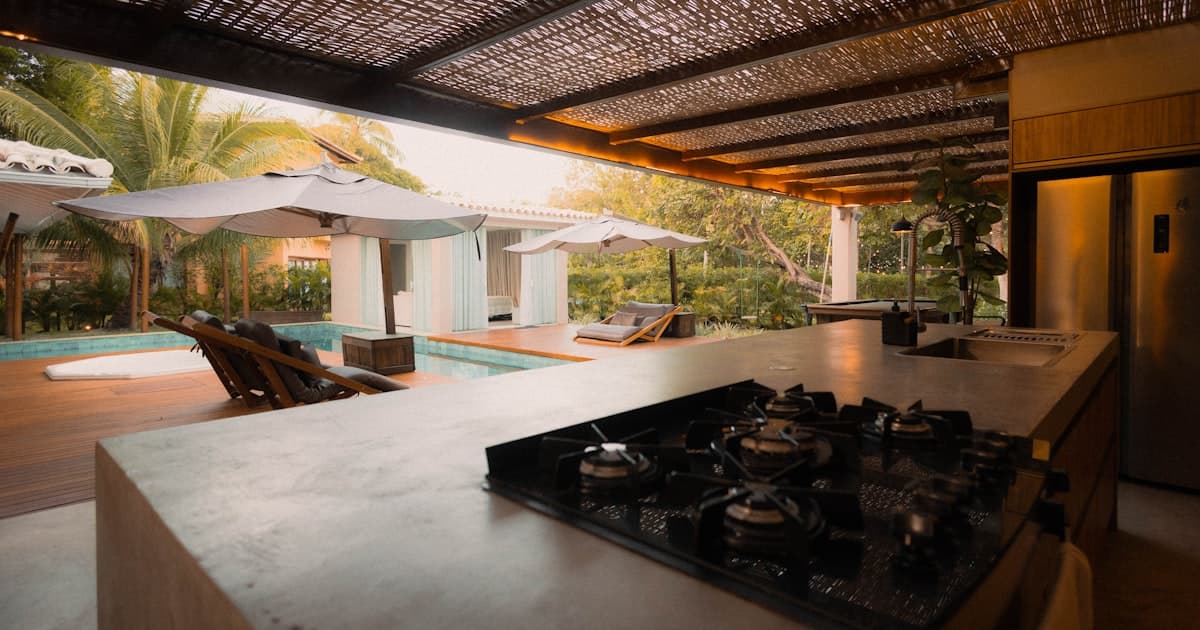
Outdoor kitchens in Austin need to be built for what Austin actually throws at them: 100-degree summers, hard UV exposure, occasional 20-degree winter nights, and periodic torrential rain. Here are the design choices that separate durable outdoor kitchens from ones that fail in 3 years.
1. Cover Everything
This seems obvious, but 30% of the outdoor kitchen inquiries we get are from homeowners whose uncovered outdoor kitchen is deteriorating. A roof structure over your outdoor kitchen extends the life of every appliance, cabinet, and surface by decades. You also use it more when you're not standing in direct sun or stepping back inside during a summer shower.
2. Use Concrete Block or Steel Frame for the Structure
Avoid wood framing for outdoor kitchen structures. Wood rots in Austin's humidity cycles, regardless of treatment. Concrete block (CMU) or steel stud framing with cement board substrate doesn't rot. Costs slightly more upfront but eliminates a major long-term failure mode.
3. Choose Your Countertop Material Carefully
Granite holds up well outdoors — UV-stable, heat-resistant, low maintenance. Outdoor-rated concrete looks great but needs sealing. Porcelain tile countertops are durable. Avoid wood countertops outdoors (they grey and crack). Quartz is not UV-stable — the resins yellow over time in direct sun.
4. Get the Right Grill
For Austin weather, a 36" or larger gas grill is practical — you're cooking for groups. If you're a serious BBQ household, a dedicated offset smoker or kamado (Big Green Egg) makes more sense than a gas grill. Built-in kamados look clean and function well outdoors year-round.
5. Refrigeration Needs to Be Outdoor-Rated
Indoor refrigerators fail outdoors because they're not built to handle the temperature swings and humidity. Outdoor-rated refrigerators cost 30–50% more than indoor units. It's worth the difference.
6. Plan for Storage
Outdoor kitchens with nowhere to store anything are frustrating to use. Stainless steel base cabinets with lockable doors keep your tools, grilling accessories, and supplies organized and protected. Plan for at least 2–3 base cabinet bays.
7. Run Gas, Water, and Electrical Properly
Gas: Dedicated gas line with shutoff valve at the kitchen. Size it for the total BTU load of your appliances. Water: Hot and cold lines for a sink — this is worth the extra cost. Electrical: Outdoor-rated GFCI outlets and a dedicated circuit for refrigeration. Don't power your outdoor kitchen off an extension cord.
8. Think About Shade and Air Movement
An outdoor kitchen in full west sun in Austin is nearly unusable from 3 PM to sunset in summer. Shade structure orientation matters. Ceiling fans under covered structures move air and make the space significantly more comfortable. Plan these from the start, not as afterthoughts.